
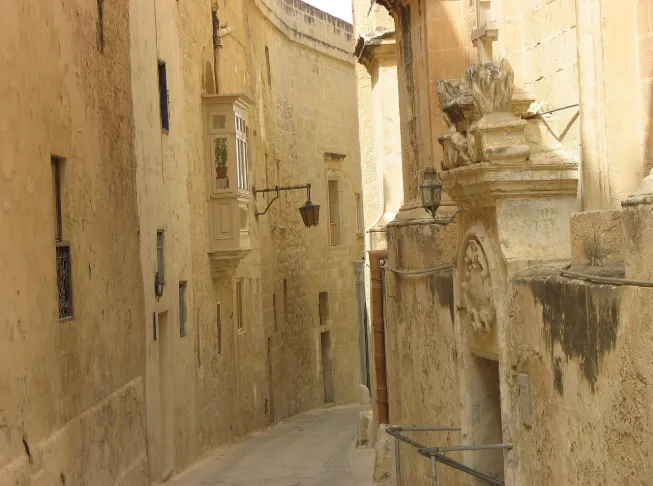
There’s something about Mdina that gets under your skin. Maybe it’s the way the sun hits the yellow stone, or the sound — or rather, the silence. The place hums with quiet. Not empty quiet, but heavy, almost sacred. As if every cobbled street is holding its breath, waiting for you to pass.
Once upon a time, this was Malta’s capital. But then came the Knights of St. John, war, and the reshuffling of power. By the time Valletta was built in 1571, Mdina had already started slipping into silence. The nobles stayed behind, in their grand palaces, but the buzz of political life had moved on. Mdina was left mostly abandoned. The people called it the Silent City. And the name stuck. Walk through its narrow streets, and you’ll feel it, too — that echo from the past.
A city layered in time
Mdina didn’t just pop up out of nowhere. We’re talking 4,000 years of history here. The Phoenicians fortified it, the Romans gave it a palace, and the Arabs shaped it with their language and city design. Even Saint Paul, shipwrecked on Malta in AD 60, is said to have lived just outside Mdina.
Then came the earthquake of 1693 — the kind that destroys centuries in minutes. But Mdina rebuilt. She always does. The new style was baroque, layered right on top of the medieval bones. It’s a city you don’t just see — you read it. Stone by stone, era by era.
Why so quiet?
Mdina earned its nickname because it became almost empty when the capital moved. And it stayed that way — not abandoned, but unbothered. Today, very few people live inside its walls. Cars are almost completely banned. Tourists come and go, sure, but there’s a code of conduct here: hush.
The silence isn’t just policy — it’s character. It makes you lower your voice. It makes you slow down. Furthermore, it makes you feel like you’ve wandered into a secret. And maybe you have.
Mdina today
Mdina is small, but it’s not lacking. Think: cathedrals with marble tombs, palaces, museums, hidden gardens. And views. From the bastions, you see half the island laid out in soft layers of green and stone. Stay till sunset if you can. The place glows.
At night? Magic. Lanterns flicker, the streets go almost empty, and if you time it right, you’ll have whole squares to yourself. It’s like wandering a film set — only realer, older, and without the noise.
How to visit Mdina with Malta tours
You don’t need a time machine — just a good tour. Tours in Malta offer excellent day trips that include Mdina, often paired with stops in nearby Rabat or the Dingli Cliffs. Look for options that include a walking tour, because Mdina is best explored on foot. A guide will help bring those stone walls to life, sharing tales of nobles, battles, and whispered secrets.
Want something slower? Go private. There are boutique tour options that end with dinner inside the city — romantic, quiet, and unforgettable.
Whether you’re a history nerd, a quiet soul, or just someone who likes pretty places, Mdina will get you. Not with a bang. With a whisper. Book it here.