
Picture this. You step off the plane in Malta, the door opens and the air hits you like a hairdryer set to maximum. Welcome to a Maltese summer. Now picture the same island in December, with grey clouds, streets turning into little rivers for an hour, then sunshine again by lunch. Same island, two completely different moods. Here is how to enjoy both without melting or getting soaked. For a broader look at the seasons, see our guide to the weather in Malta.
Why Malta gets so hot
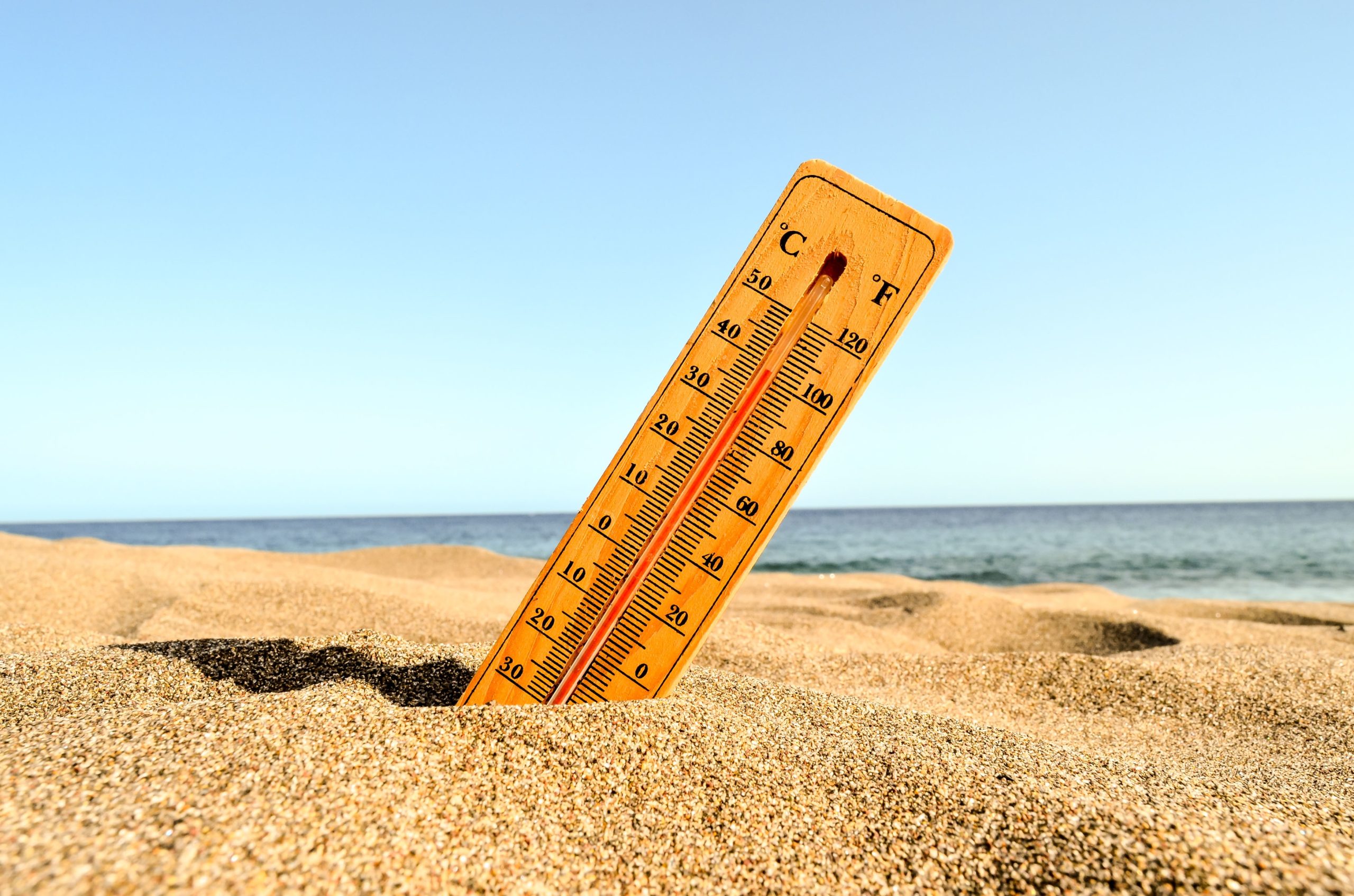
Malta sits in the middle of the Mediterranean Sea, closer to North Africa than most people realise. That gives the island long, dry summers with barely a cloud in sight. In July and August the thermometer normally reads between 31 and 34 degrees during the day and around 22 to 24 degrees at night. That sounds fine on paper, but there is a catch, and it is the humidity. In July the air holds around 69 percent moisture, so sweat does not evaporate and your body cannot cool itself. A day of 34 degrees can easily feel like 38.
Then there are the heatwaves. The Maltese weather office calls it a heatwave when the maximum temperature stays at least 5 degrees above the monthly average for three days or more. When that happens, warnings go out in yellow, orange or red, with red being the most serious. If you want to know how extreme it can feel on the ground, our piece on the scorching summer on the Maltese islands goes into more detail.
The record summer of 2026
The summer of 2026 showed how intense that can get. From 16 to 22 July the island sat under a seven day heatwave. On 19 July the temperature climbed to 43.3 degrees, the highest July reading ever measured in Malta, and for three days in a row it stayed above 42 degrees, which had never happened before. The all time record is 43.8 degrees, set on 9 August 1999, so July 2026 came within half a degree of it.
There is one more thing to know about, and that is the xlokk. That is the local name for the sirocco, a hot wind that blows up from the Sahara. When the xlokk arrives, the temperature can jump several degrees within hours and the sky turns a hazy yellow from desert dust. It usually blows over within a day or two.
A Maltese summer at a glance
| Detail | At a glance |
|---|---|
| Daytime July and August | 31 to 34 degrees |
| At night | 22 to 24 degrees |
| Humidity in July | Around 69 percent |
| Heatwave | 5 degrees above average for 3 days or more |
| July 2026 peak | 43.3 degrees on 19 July |
| All time record | 43.8 degrees on 9 August 1999 |
| Sea temperature in August | Around 26 degrees |
How to survive a Maltese heatwave like a local
The Maltese have it figured out, so the simplest thing you can do is copy them. Keep these habits in mind on the hottest days:
- Do your sightseeing early. Valletta, Mdina and the ancient temples are best explored between 8 and 11 in the morning, because by noon the open squares turn into ovens.
- Stay out of the sun between 12 and 4 in the afternoon. That is when the locals close the shutters, eat lunch and rest. A long lunch, a swim or a nap beats a heatstroke every time.
- Book a room with air conditioning. In Malta it is not a luxury, it is the difference between sleeping and staring at the ceiling all night. Our guide to where to stay in Malta is a good starting point.
- Drink water constantly, even when you are not thirsty. Tap water is safe but tastes salty, so most people buy bottled water, which is cheap and sold on every corner.
- Head for the sea. The water reaches around 26 degrees in August, warm enough to stay in for hours. A day on the water, like our Three Islands Cruise, is the easiest way to cool down and still see the island.
- Know the warning signs of heat exhaustion, which are dizziness, headache, nausea, a racing pulse or confusion. Get into the shade, drink water and cool the skin with wet cloths.
When the rain finally comes
Now for the other side of the story. Malta gets around 600 millimetres of rain per year, which is roughly the same as London. The big difference is the timing. London spreads its rain over the whole year, while Malta dumps almost all of it between October and February.
July is practically bone dry, with less than half a millimetre on average. June and August see only a few millimetres. Then September brings the first showers, October picks up with around 80 millimetres, and November and December are the wettest months with over 100 millimetres each. December alone has around 15 rainy days.
| Period | Rainfall |
|---|---|
| July | Under half a millimetre, practically dry |
| June and August | Only a few millimetres |
| September | The first showers arrive |
| October | Around 80 millimetres |
| November and December | Over 100 millimetres each, December with around 15 rainy days |
| Whole year | Around 600 millimetres |
Maltese rain is not the gentle drizzle you might know from home. It arrives in short, violent bursts, often with thunder. Because the island is mostly rock and concrete, the water has nowhere to go. Within an hour, low lying towns like Msida and Birkirkara can have water sloshing through the streets. Locals simply wait it out in a cafe, and an hour later the sun is usually back.
For tourists this is good news. A downpour rarely wrecks a whole day. Pack a light rain jacket if you visit between November and February, check the forecast in the morning and save indoor stops like the museums in Valletta for the wetter afternoons.
So when should you go
For beach weather without the brutal heat, aim for June or September. If you love serious heat, July and August will not disappoint, but plan your days around the sun. And if you would rather explore than sunbathe, October to April gives you mild temperatures, green landscapes and plenty of dry days between the showers. That quieter season is lovely, as our guide to Malta in winter shows. Whatever you choose, Malta will show you the sun eventually. It always does. When you are ready to plan the trip itself, our guide to planning your Gozo trip helps you put the days together.
Frequently Asked Questions
How hot does Malta get in summer?
In July and August daytime temperatures are normally 31 to 34 degrees. During a heatwave it climbs much higher, and in July 2026 it reached 43.3 degrees, the hottest July reading ever measured on the island.
What is the wettest month in Malta?
November and December are the wettest, with over 100 millimetres of rain each. December has around 15 rainy days, but the rain usually comes in short bursts rather than all day.
When is the best time to visit Malta?
June and September give you warm beach weather without the peak heat. July and August are for those who love it hot, and October to April is mild and green, ideal if you would rather explore than sunbathe.