
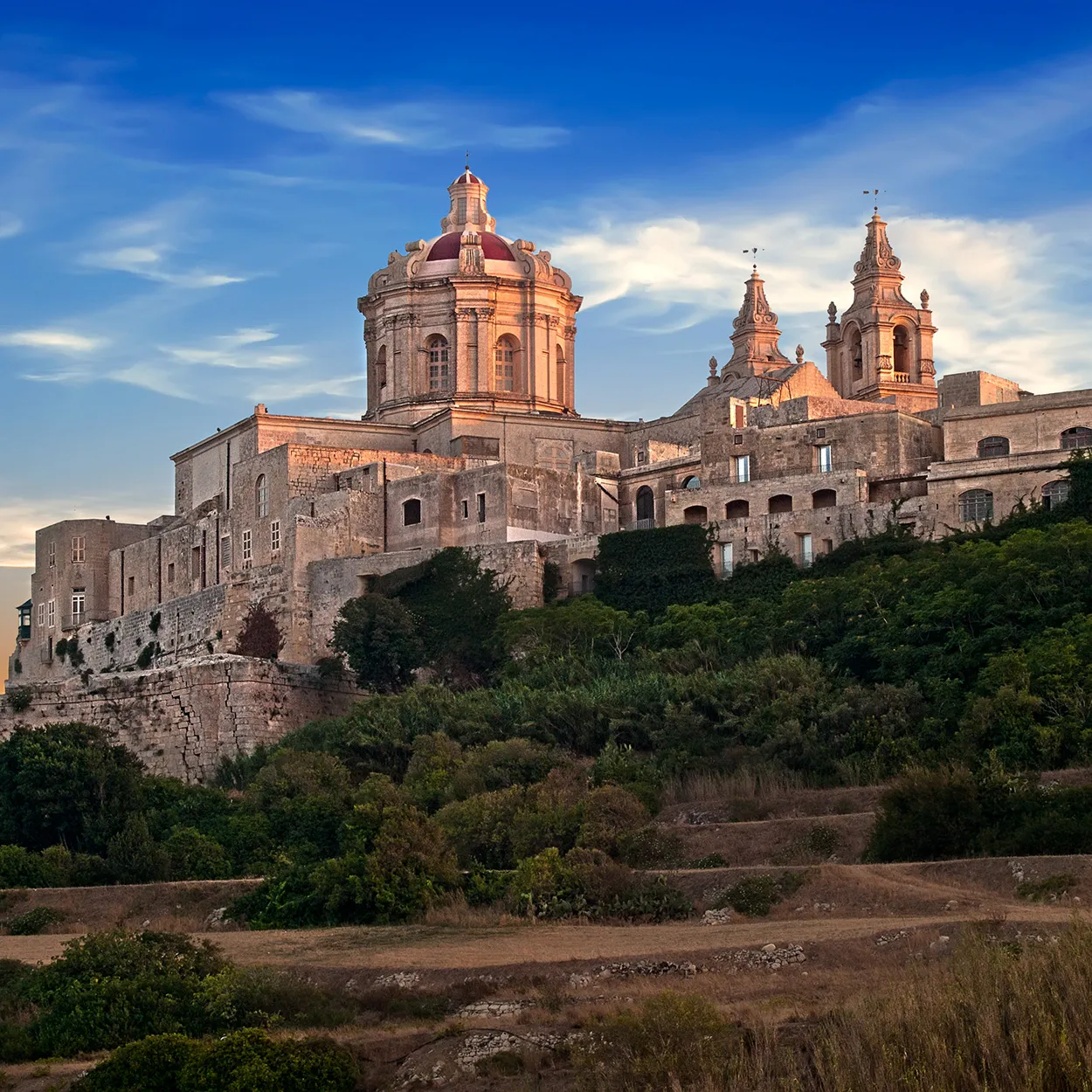
Stepping Through the Gates of Mdina
A Mdina Malta Tour often begins with a moment of surprise. Visitors arrive from Malta’s busy roads and modern towns, only to find themselves standing before enormous stone walls that seem untouched by time. The famous Main Gate immediately creates anticipation. Beyond it lies a city unlike anywhere else on the island.
As soon as you walk through the entrance, the atmosphere changes. Traffic noise disappears, crowds become quieter, and the pace of life slows dramatically. Many tourists describe the experience as stepping onto the set of a historical film. The narrow streets, golden limestone buildings, and centuries-old architecture create an environment that feels worlds away from modern Malta.
Quick Facts: Mdina at a Glance
| Detail | At a glance |
|---|---|
| Nickname | The Silent City |
| Age | More than 4,000 years old |
| Former role | Malta’s capital before Valletta |
| Main landmark | St Paul’s Cathedral |
| Known for | Medieval and Baroque architecture, bastion views |
The Feeling of Walking Through the Silent City
Mdina carries the nickname The Silent City, and visitors quickly understand why. Unlike many historic destinations around Europe, Mdina does not rely on busy shopping streets or large crowds. Instead, the city invites people to wander without a plan.
Every corner reveals something new. A hidden courtyard appears behind a narrow passageway. An ornate wooden balcony hangs above a quiet street. Elegant palaces stand beside small doorways decorated with flowers and religious statues. The city rewards visitors who take their time.
Many tourists find themselves looking up more than usual. Beautiful stone carvings, family crests, and decorative balconies cover the facades of the buildings. Even those with little interest in history often become fascinated by the details surrounding them.
A Brief Look at Mdina’s History
Mdina’s story stretches back more than 4,000 years. The city served as Malta’s capital long before Valletta existed. Throughout the centuries, Phoenicians, Romans, Arabs, Normans, and later the Knights of Saint John all left their mark on the city.
For generations,